Padel technique · 9 min
Improve your padel smash: technique, common mistakes and drills
A good smash starts with shot selection, not maximum force. Only a short, high lob in front gives you the height and balance to turn footwork, rotation and reach into a controlled attack.
PadelLens.AI editorial team
Published 20 July 2026
Training guidance for recreational players. Not a substitute for individual coaching.
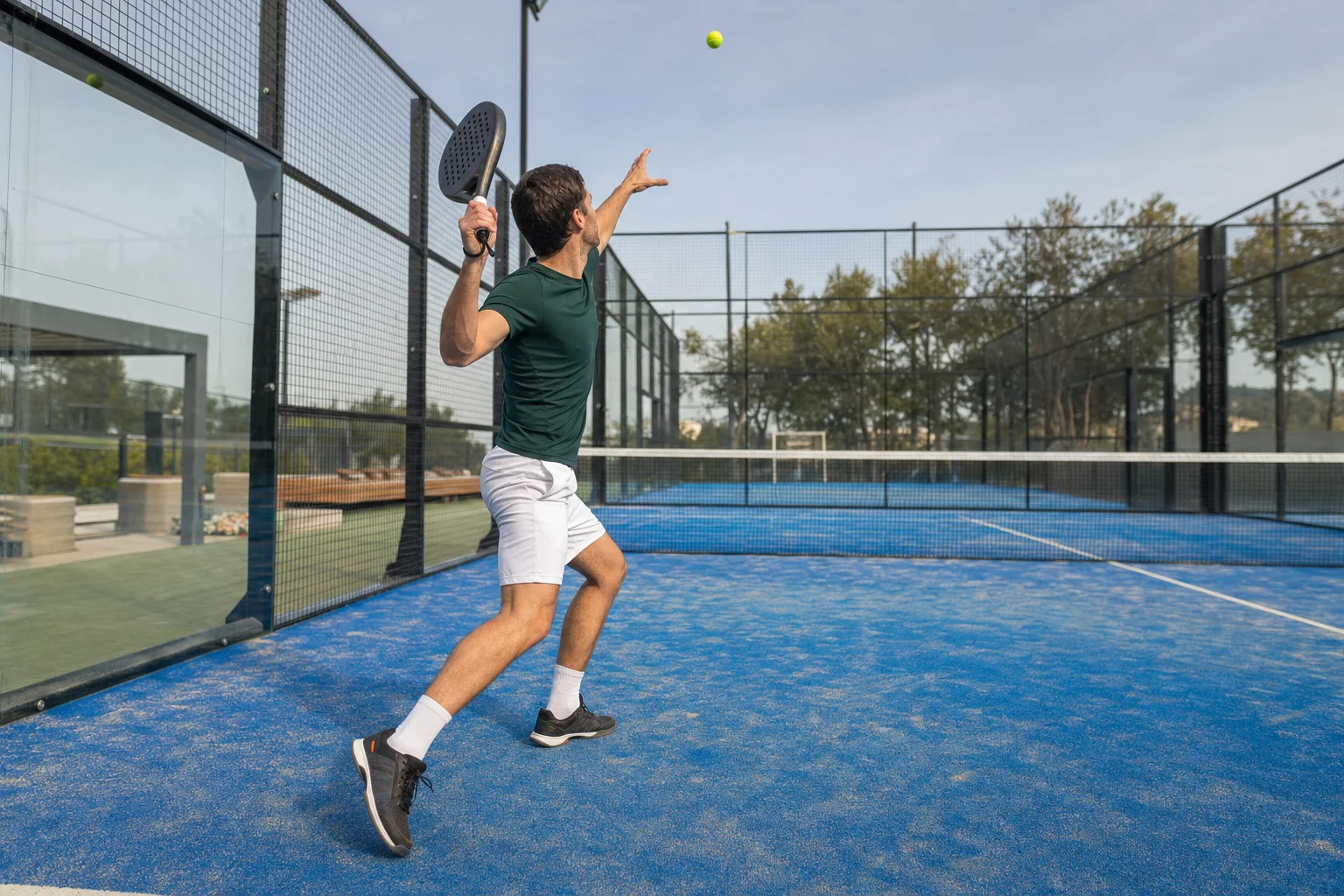
The essentials in 20 seconds
- • Attack only short, high lobs when balanced
- • Turn early and adjust underneath with small steps
- • Contact as high as you control, slightly in front
- • Let legs and trunk accelerate; the arm transfers
Shot selection
When is the smash really the right answer?
The flat smash aims to finish or force a very weak defence. It needs a short lob, height and stable positioning. If you lean back or reach behind your head, a bandeja or víbora is usually the better choice.
In padel the rebound matters. A smash without enough depth may fly back off the rear glass and hand opponents a counterattack. Choose target and length for your position and conditions instead of simply hitting hard.
| Overhead | Main goal | Risk | Good prerequisite |
|---|---|---|---|
| Flat smash | Finish the point | high | short lob, balanced underneath |
| Kick smash | High rebound / X3 | very high | time, topspin and distance |
| Víbora | Build pressure | medium | balance, more lateral contact |
Technique
The flat smash in five steps
- 1
Read the lob early
Split step at the opponent’s contact and decide whether height and length truly justify a smash.
- 2
Move side-on
Turn shoulders and hips, point the free hand towards the ball and adjust with small steps rather than running backwards.
- 3
Load legs and trunk
Flex knees and hips under control. Let the racket drop loosely behind the right shoulder without collapsing the elbow.
- 4
Contact high and slightly in front
Reach up over the right hitting side. Keep the face stable and allow forearm rotation through, not before, contact.
- 5
Land balanced and read
Finish towards the target, stabilise and immediately check whether the ball is returning.
Movement sequence
Read, load, drive through
- 01
Get under the lob
Turn side-on and keep the ball in front of the hitting side.
- 02
Extend upwards
Accelerate through legs, trunk and arm as one chain.
- 03
Land balanced
Do not fall into the net; read the rebound immediately.
Contact point
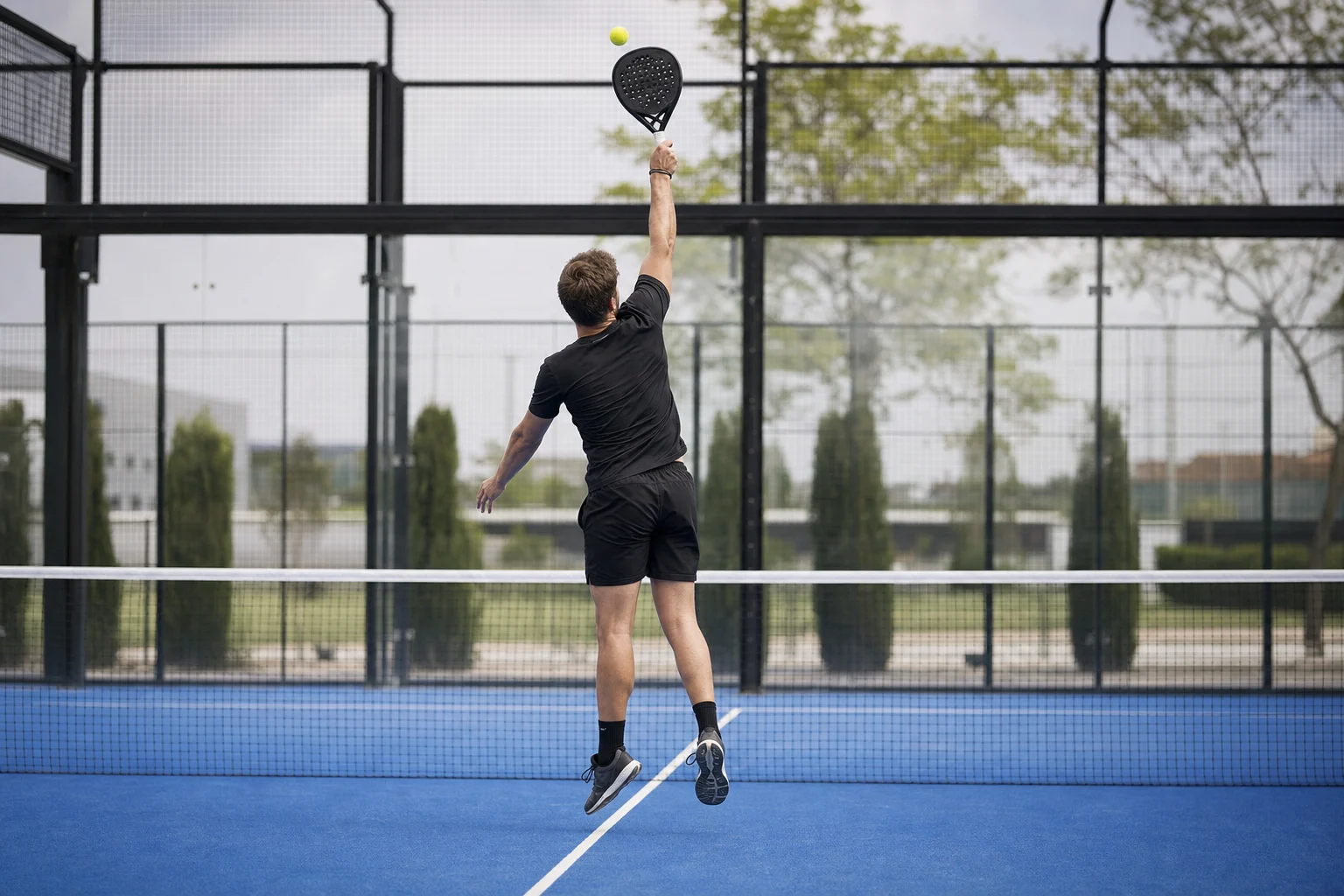
HIGH + FRONT
Above the hitting side, not behind your head
Meet the ball as high as you can control and just in front of your right shoulder. Too far forward loses height; too far back forces your lower back to compensate.
- Right hitting arm almost extended
- Head stays up and eyes remain on the ball
- Trunk rotates through instead of falling sideways
Self-diagnosis
Five common smash mistakes and their fixes
You smash every lob
Deep or wide balls force late, off-balance contact.
Fix: Attack only short lobs and control the rest.
You stay square
Without turning there is no room for shoulder rotation or adjustment.
Fix: Turn on the first step and use the free hand to track.
You swing only with the arm
You lose height and power from the legs and trunk while loading the shoulder.
Fix: Accelerate from the ground through hips and trunk to the arm.
The ball is behind you
Contact drops, the face opens and the body leans back.
Fix: Stop earlier and build contact above the hitting side.
You admire the winner
A rebound catches you open and stationary.
Fix: Land balanced and expect a return until the ball is dead.
Training
Three drills for a controlled smash
Chain, not arm
Move slowly from leg extension to trunk rotation and arm last. Hold the finish for two seconds.
High contact window
Hit short feeds at 60 percent. Count only contacts that are high and in front of the hitting side.
Smash or control
Attack short feeds; answer deep feeds with a bandeja or víbora. Score the decision before the result.
Video analysis
How to film your smash
Show approach, both feet, ball flight, contact and landing. A rear-side angle reveals whether the ball genuinely stays in front of the hitting side.
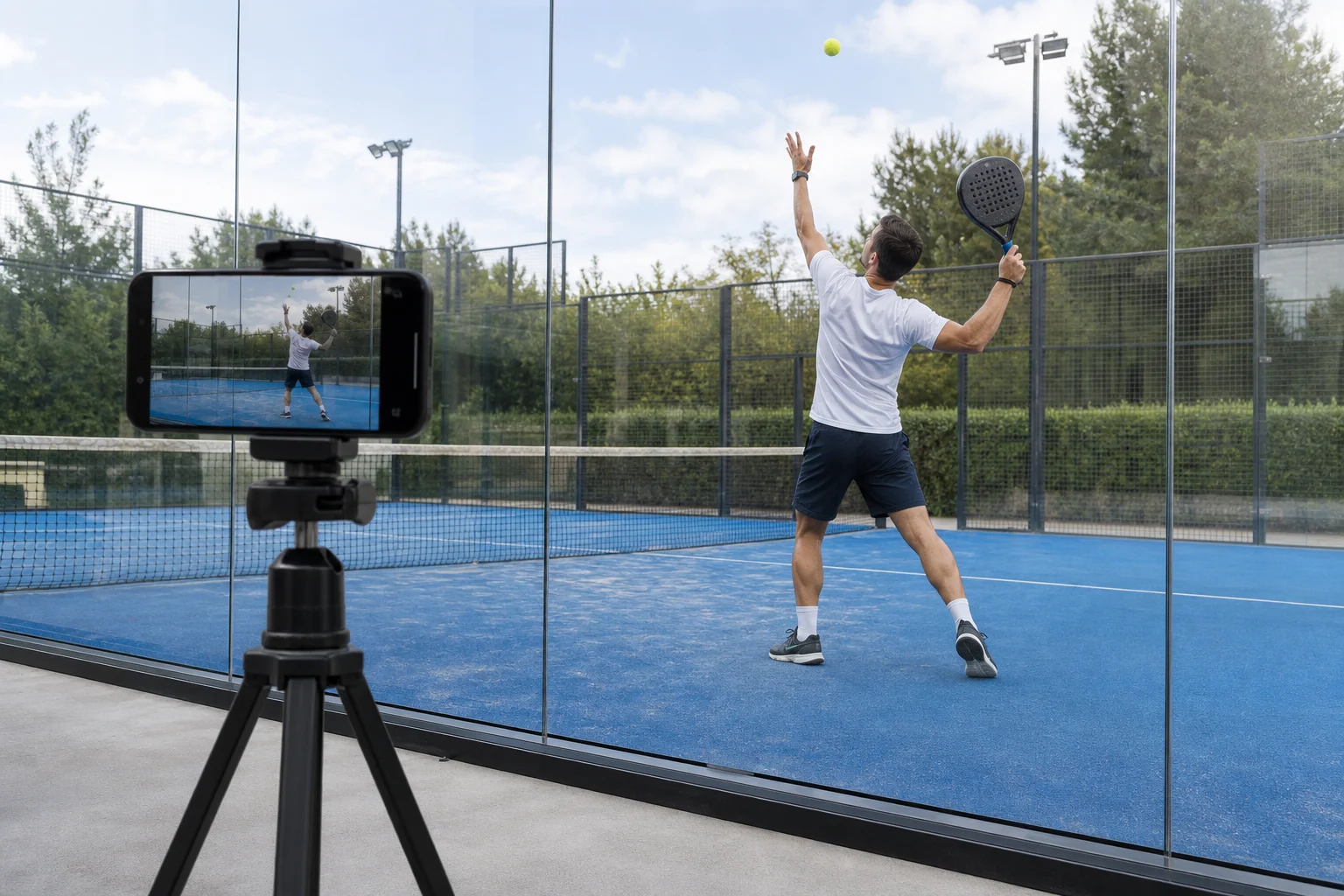
Position
Behind and to the side, offset slightly towards the free-hand side and safely behind glass.
Height
Between hip and chest height to avoid distorting contact and trunk rotation.
Frame
Full body, at least two metres above the head and the landing; do not pan.
FAQ
Common questions about the padel smash
When should I smash in padel?
When the lob is short and high, you can set underneath it and you have a clear target. From a leaning position, choose control.
What is the difference between a flat and kick smash?
A flat smash prioritises direct pace. A kick smash brushes with topspin to create a higher, accelerating rebound.
Do I need to jump?
No. A grounded smash is more repeatable for many recreational players. Jump only when timing and landing remain controlled.
Where should I aim?
It depends on position and opponents. Deep central targets often offer margin; sharp angles need excellent balance.
Why does my smash come back off the glass?
Length, contact quality or conditions may be insufficient. Train target and contact height before adding pace.
Sources and technical note
LTA teaching resources and PadelMBA support the technical fundamentals; the FIP syllabus adds curriculum context. Contact varies with body shape; persistent shoulder pain needs professional assessment.