Advanced padel technique · 10 min
Padel kick smash: topspin, contact and controlled rebound
Spin matters more than raw force. An upward racket path brushes the ball so it accelerates after the bounce and kicks steeply from the back glass. X3 is one possible outcome, not an automatic result.
PadelLens.AI editorial team
Published 20 July 2026
Training guidance for recreational players. Not a substitute for individual coaching.
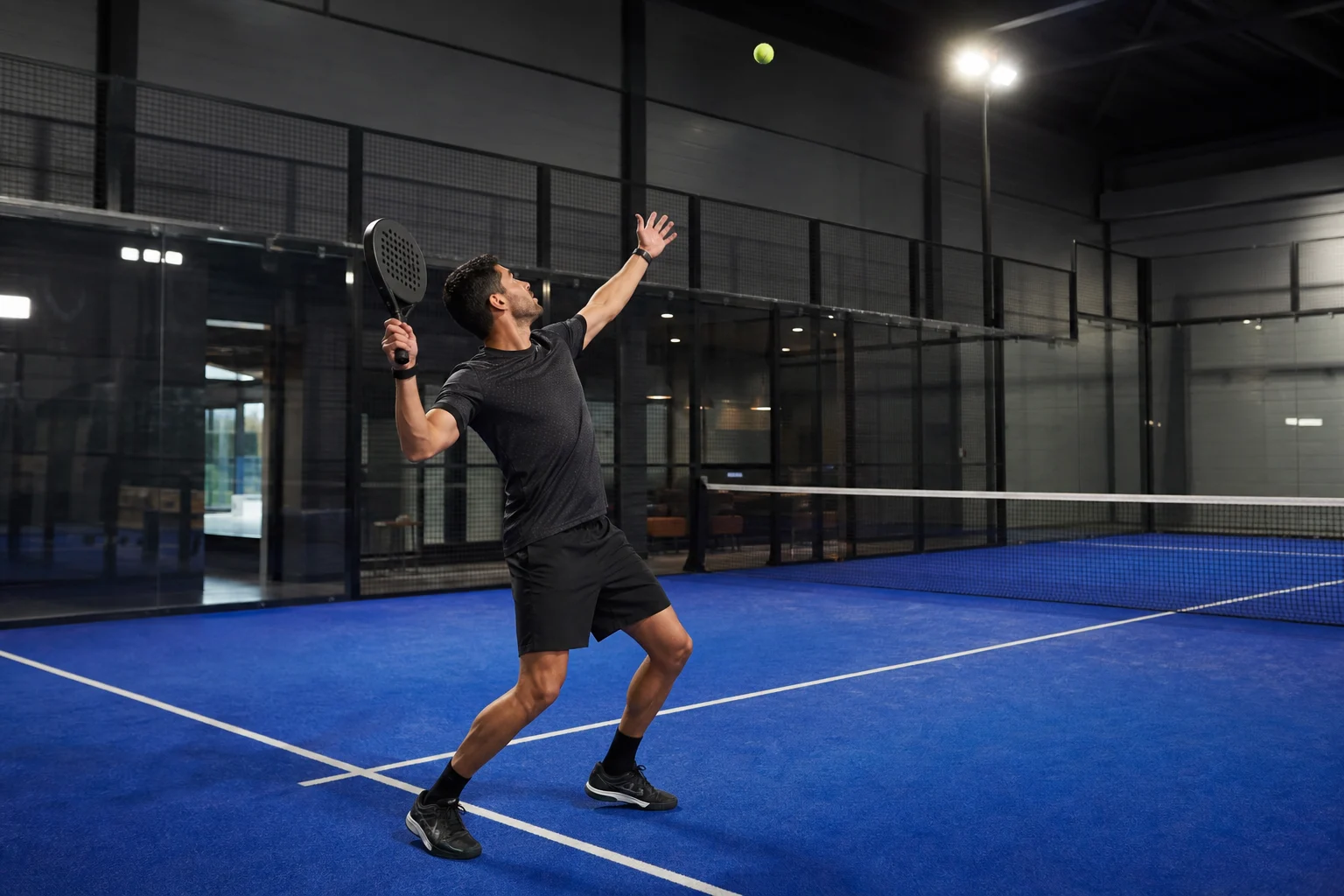
The essentials in 20 seconds
- • Choose it only with time, height and balance
- • Organise the ball overhead and slightly to the non-hitting side
- • Brush up and out across the back of the ball
- • Develop spin and target before maximum speed
Spin and tactics
What defines a kick smash, and when does it become X3?
A kick smash is a topspin smash. The rising path creates forward rotation, accelerating the bounce and potentially sending the ball steeply upwards from the rear glass.
X3 also needs direction, depth, height, pace and the right wall angle. Not every good kick smash leaves the court; a high, awkward rebound is already a valuable outcome.
| Variation | Spin | Main goal | Demand |
|---|---|---|---|
| Kick smash | topspin | high rebound | advanced |
| X3 | topspin + angle | exit over side wall | very high |
| Flat smash | little spin | direct finish | high |
Technique
The kick smash in five steps
- 1
Choose the right lob
It must be high, short and slow enough. Under pressure the spin action becomes a rushed arm pull.
- 2
Move side-on underneath
Turn early and set slightly farther under the flight than for a flat smash. For a right-hander the ball is overhead to slightly left.
- 3
Load the racket low
Keep the right hand relaxed as the racket drops behind. Load knees and trunk without extreme lower-back extension.
- 4
Brush upwards and out
Accelerate low to high over the back of the ball. The racket face controls direction; the path creates kick.
- 5
Finish the rotation
For a right-hander the racket finishes farther out to the right. Land balanced and read the rebound.
Movement sequence
Under the ball, up through it
- 01
Under the flight
Turn side-on and create room for a rising racket path.
- 02
Brush upwards
Legs, trunk and a loose arm create height and topspin.
- 03
Read rebound
Watch the wall angle before choosing the next position.
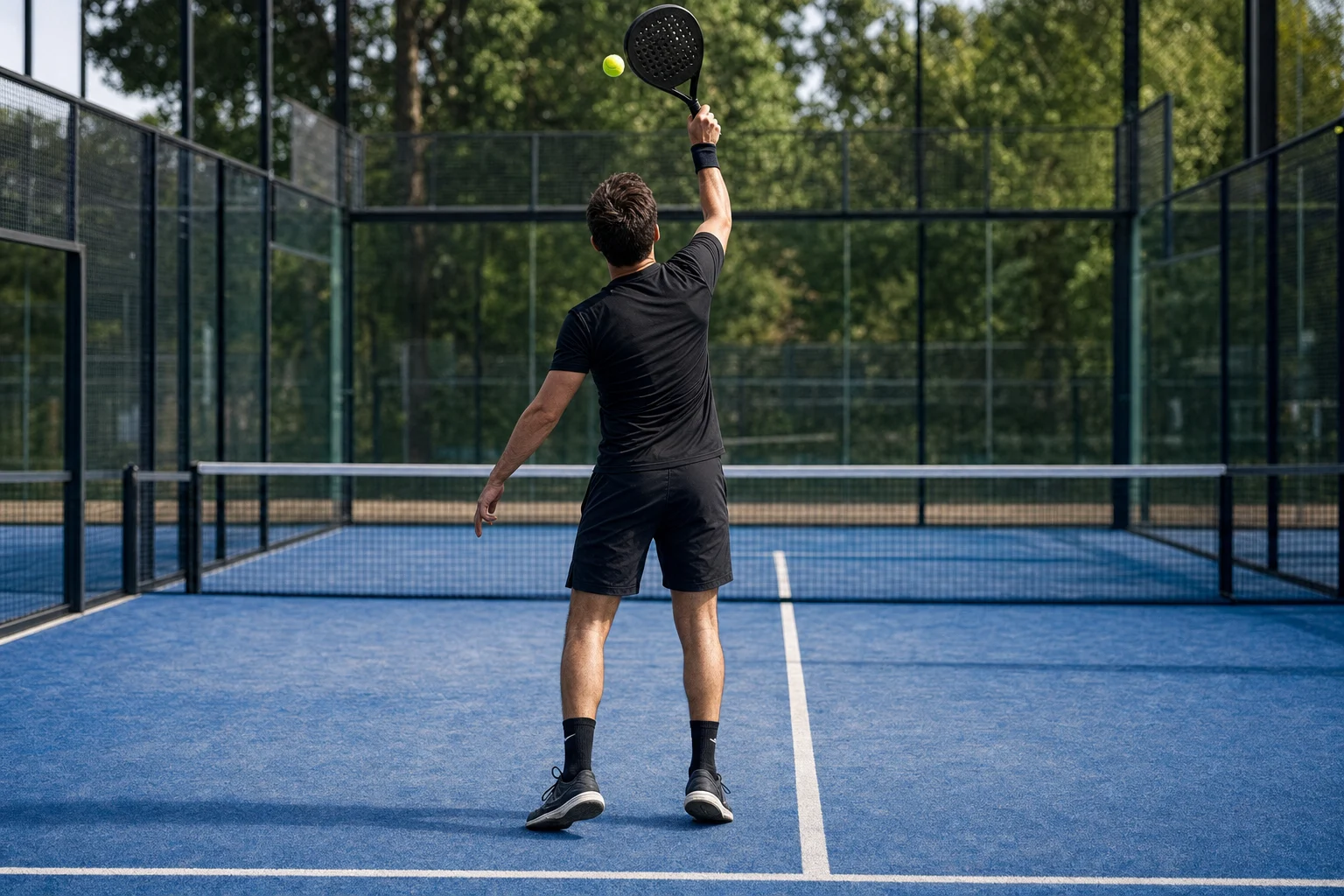
Contact point
HIGH + LEFT
Overhead, slightly to the non-hitting side
For a right-hander the ball is roughly overhead to slightly left, allowing the racket to rise up and out to the right.
- Racket clearly in the right hitting hand
- Arm reaches high without shrugging the shoulder
- Trunk stays long rather than collapsing backwards
Self-diagnosis
Five common kick-smash mistakes
You try kick without height
A low lob leaves no space for a rising path.
Fix: Choose a bandeja or víbora.
You drive flat forwards
There is speed but little dip or kick.
Fix: Reduce force and exaggerate the upward path first.
Spin comes only from the wrist
Contact becomes unstable and load rises.
Fix: Coordinate legs, trunk and forearm rotation.
You overextend the back
You create room through the lumbar spine instead of positioning.
Fix: Move underneath earlier and control ribs over pelvis.
You chase X3 immediately
The narrow target removes margin before spin is stable.
Fix: Build a high rebound to a broad rear-wall zone first.
Training
Three progressions for real topspin
Short-range brush
Play gently against the back wall and observe whether the ball accelerates upwards after contact.
High rebound
Aim at a broad deep zone with 60 percent pace. Score rebound height, not noise or exit.
X3 corridor
Narrow the target only after eight of ten balls show clear kick.
Video analysis
How to film the kick smash
Capture racket path and rebound in the same clip. Film behind and to the hitting side so player, ball, floor contact and rear glass remain visible.
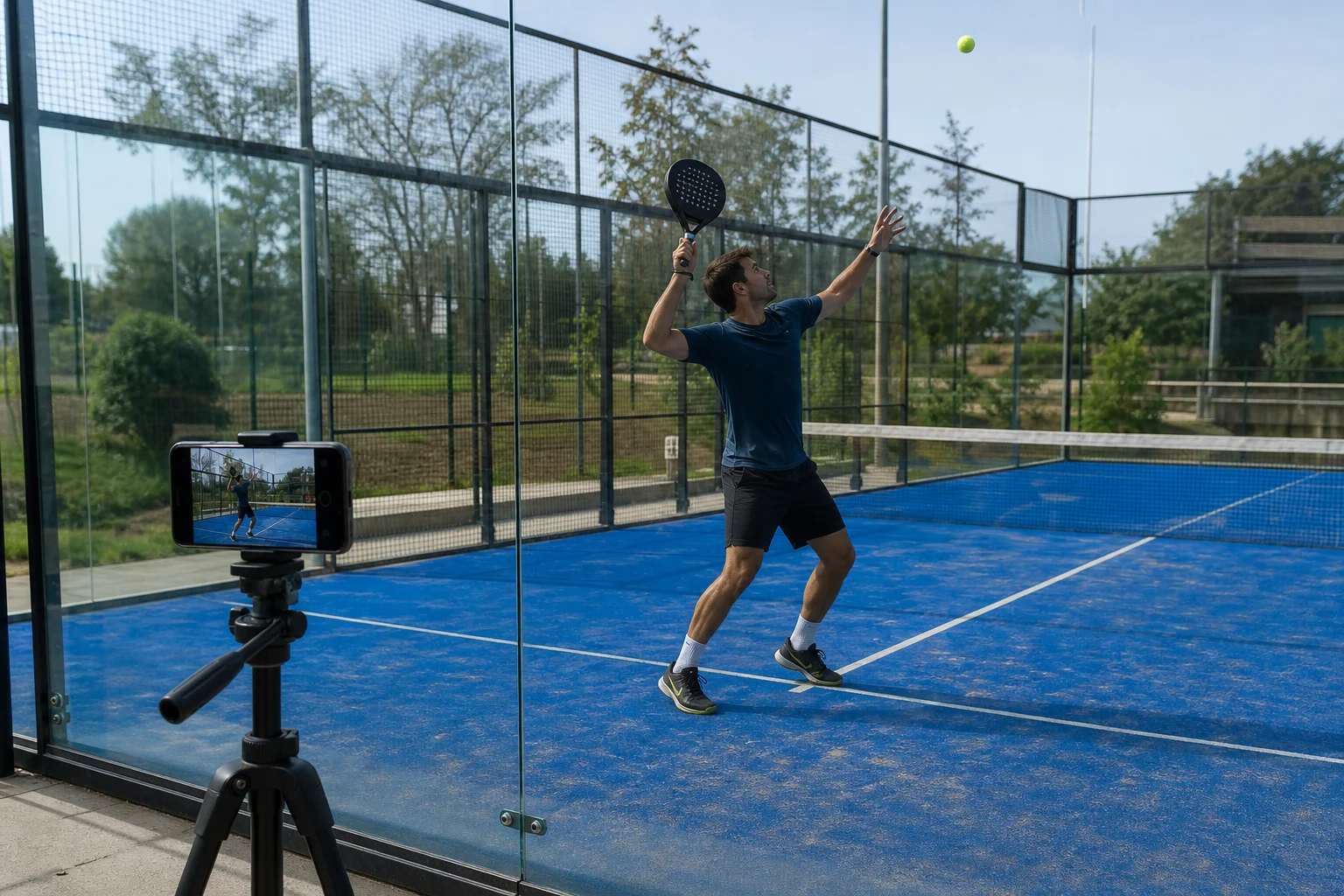
Position
Behind and to the hitting side with a clear view of the rear glass.
Height
Chest height to read contact and vertical path.
Frame
Full body, high ball, floor target and rear glass; keep the camera still.
FAQ
Common questions about the kick smash
Is every kick smash an X3?
No. Kick describes topspin and rebound. X3 also requires angle, height and enough exit over the side wall.
Where is contact for a right-hander?
High overhead to slightly left, allowing the racket to rise up and out.
Do I need an extreme grip change?
A continental base is useful. Small adjustments are individual and should not be forced without coaching.
Is it suitable for beginners?
It is advanced. Build reliable overhead contact, bandeja and flat smash foundations first.
Why is my rebound low?
The path may be too flat, contact too far forward or target too short. Balls, temperature and court also matter.
Sources and technical note
The kick-smash technique is supported primarily by the specialist explanations from Padel Magazine and StudyPadel; FIP and PadelMBA add curriculum context. Shoulder or back pain is a stop signal.