Padel technique · 8 min read
Improve your bandeja: technique, common mistakes and drills
A bandeja is not a soft smash. It is the control shot that answers a lob: get into position early, keep the ball in front and recover the net without rushing.
PadelLens.AI editorial team
Published 18 July 2026
Training guidance for recreational players. It does not replace individual coaching.
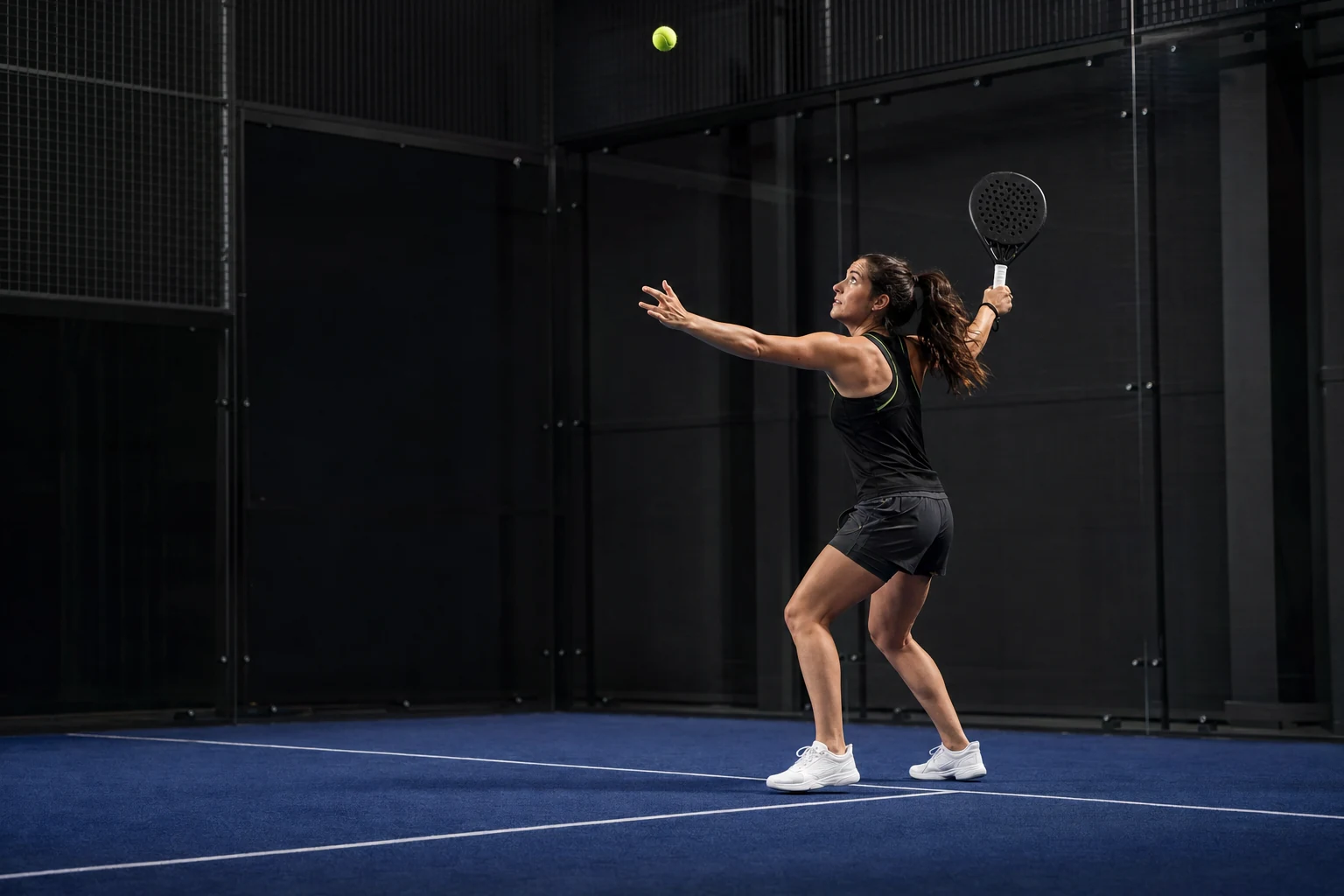
The essentials in 20 seconds
- • Control and net position before outright power
- • Turn side-on early and use small adjustment steps
- • Meet the ball to the side and slightly in front
- • Play deep, then recover the net immediately
The idea
What is a bandeja – and why do you need it?
A good lob forces you away from the net. The bandeja keeps that attacking position from turning straight into defence. You handle the high ball under control, keep the bounce low and buy time to move forward again.
The aim is rarely an outright winner. A good bandeja is repeatable, lands deep and gives your opponents little room to attack the next ball. For recreational players, that choice is usually worth more than a risky overhead hit at full pace.
| Shot | Main purpose | Pace | Typical contact |
|---|---|---|---|
| Bandeja | Control, retain the net | moderate | to the side, in front |
| Víbora | More pressure and sidespin | moderate to fast | more lateral and aggressive |
| Smash | Finish the point | fast | as high as possible |
Technique
The bandeja in five steps
- 1
Read the lob early
Split step as your opponent strikes. As soon as the ball climbs, begin preparing – not once it is already above you.
- 2
Turn side-on
Rotate your shoulders and hips. Your free hand helps you track the ball and stay balanced while the racket prepares early above shoulder height.
- 3
Adjust with small steps
Move behind the flight path without leaning backwards. Several quick adjustment steps give you more accuracy than one rushed stride.
- 4
Meet the ball to the side and in front
Create space and strike roughly between shoulder and forehead height. Let the racket travel through the ball under control; a touch of slice can keep the bounce low.
- 5
Follow through and close the net
Allow the swing to continue forward and start recovering immediately. The bandeja is not finished until your court position is stable again.
Movement sequence
Let the ball organise your feet
Turn side-on
Rotate early and use small steps to get behind the ball.
Create the contact point
To the side and slightly in front, with space from the body.
Move forward again
Follow through under control and close the net position.
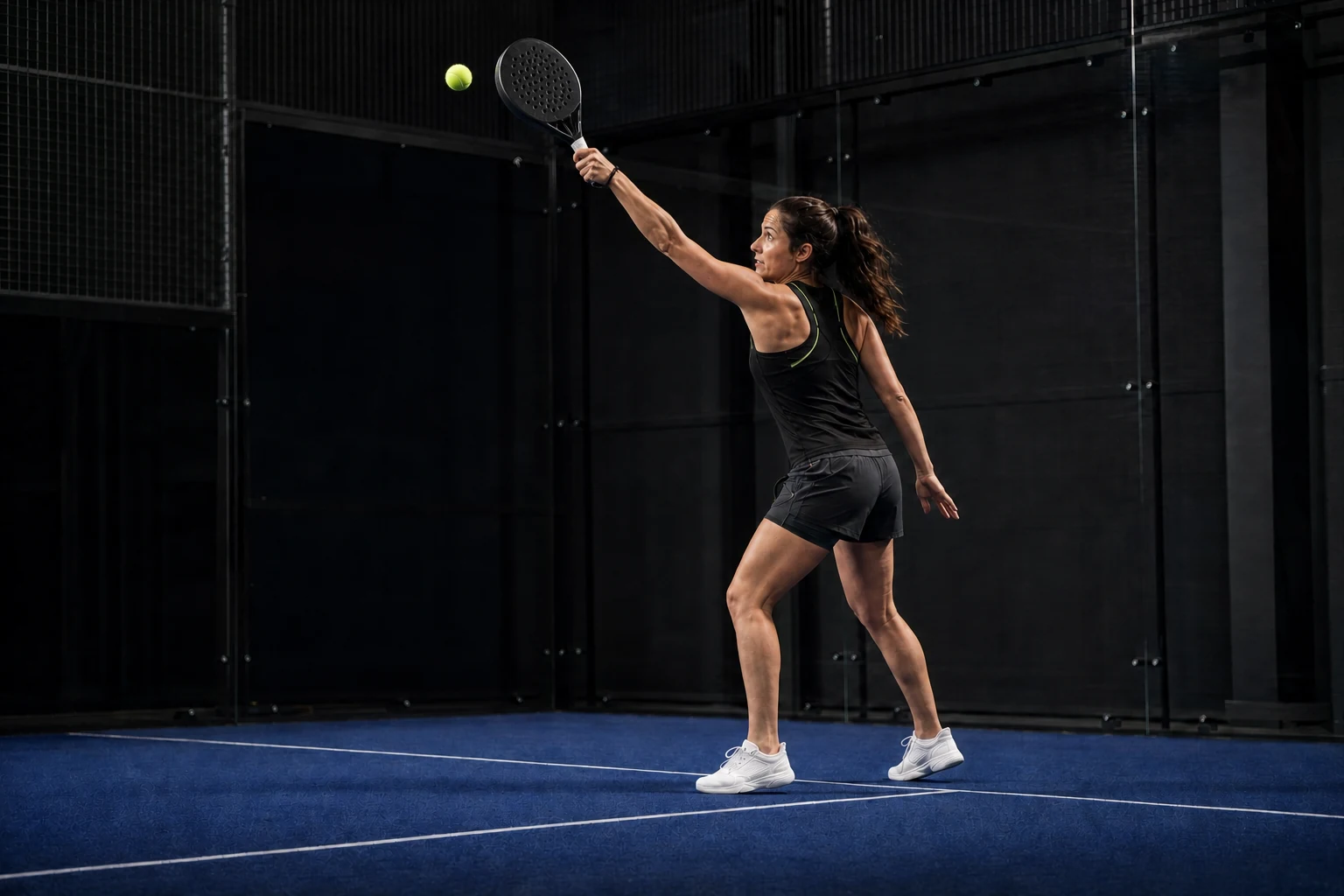
Contact window
Not above you. Not behind you.
The green window is a guide, not a measurement. Space from the ball lets you accelerate the racket without losing balance.
- To the side and slightly in front
- Long arm with a controlled shoulder
- Do not let the ball drift behind your head
Self-diagnosis
Five common mistakes – and what is really causing them
You stay square to the net
Without turning side-on, there is no room for adjustment steps. The ball drops behind you and the movement becomes rushed.
Fix: Turn your shoulders and hips with the first step. Think: profile first, position second.
Your contact point drops too low
The arm is often not the issue. More commonly, you start late or take steps that are too small.
Fix: Start earlier and create space. Stop travelling backwards before you swing forward.
You try to finish the point
Too much pace reduces control and often gives the opponent a quick counterattack after the rebound.
Fix: Prioritise depth and a low bounce. Judge placement and net recovery, not only ball speed.
Only your arm is working
Without help from the legs and trunk, the contact point and racket face change from ball to ball.
Fix: Stabilise on the outside leg and initiate the forward action through rotation.
You watch your own shot
You remain in mid-court after the bandeja and surrender the very position the shot is meant to protect.
Fix: Build the first step back to the net into your follow-through. The shot and recovery belong together.
Training
Three drills for a more reliable bandeja
Turn–stop–forward
Start at the net. Split step, turn side-on, take three quick adjustment steps back, stop in balance and move forward under control. Finish every repetition balanced.
Contact window
A partner feeds gentle lobs. Hit at a deliberately moderate pace and ask only one question: is the ball to the side and slightly in front? Recover the net after every shot.
Depth before pace
Mark a large target in the opponent’s corner. A shot only counts if you recover a stable net position afterwards. Add pace only once the placement is repeatable.
Video analysis
How to film your bandeja properly
One successful repetition tells you very little. Film a short series and look for the pattern that repeats: do you start late, stay square or let the ball fall behind you? Those recurring causes are what make technique work useful.
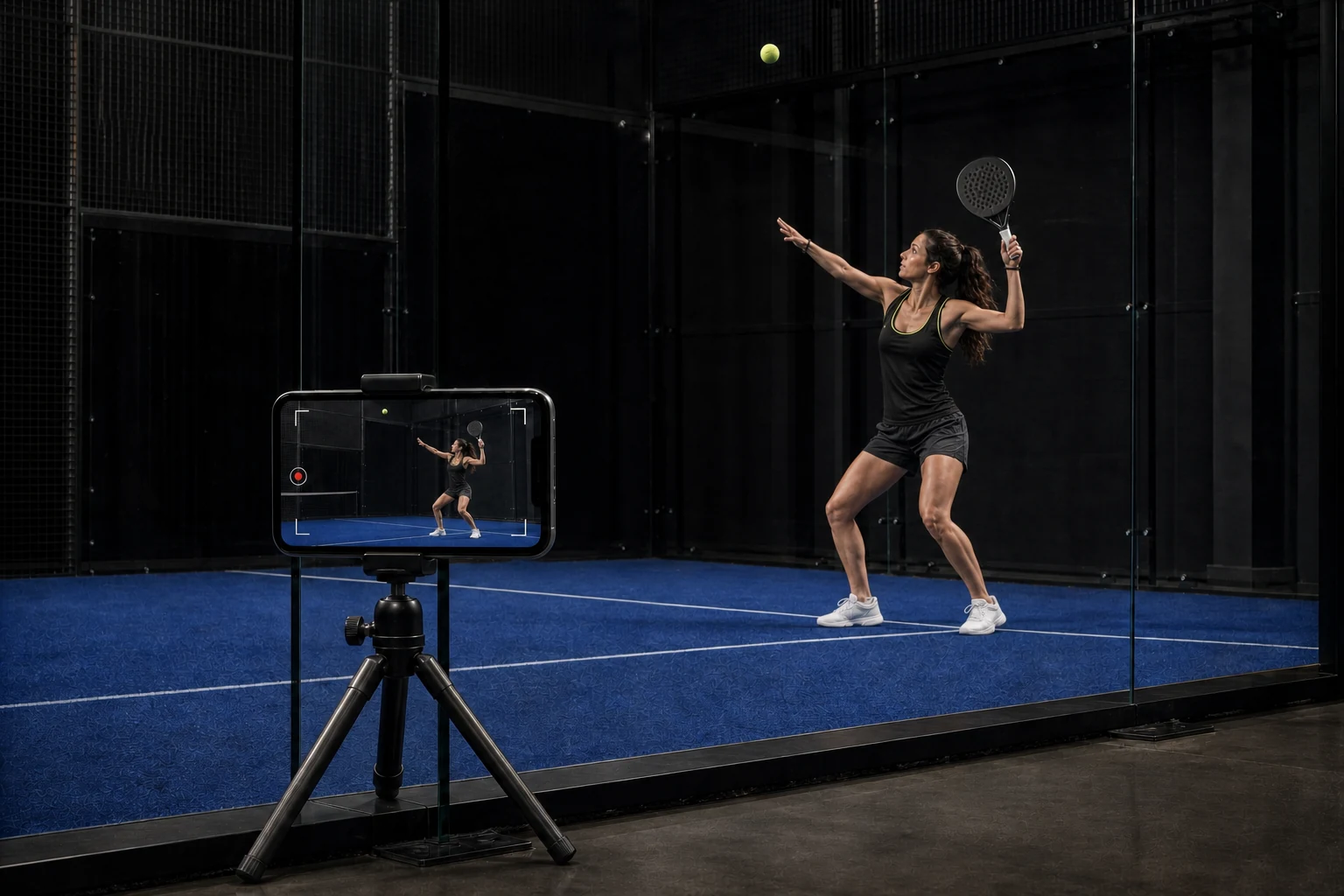
Position
Slightly behind and to the side, so the feet, racket and ball contact are visible together.
Height
Around hip to chest height. Avoid a strongly upward camera angle.
Framing
Full body plus space above the head. Keep the phone stable and do not pan during the shot.
FAQ
Common questions about the bandeja
Is a bandeja the same as a smash?
No. The bandeja is primarily a control shot: it answers a lob safely, keeps the bounce low and gives you time to retain the net. A smash is much more attacking and is more often intended to finish the point.
Which grip should I use for a bandeja?
For many players, the continental grip is a reliable starting point. It supports a compact overhead action and a slightly sliced racket face without changing grip while the lob is in flight.
How high should I contact a bandeja?
Use a point roughly between shoulder and forehead height, to the side and slightly in front, as a guide. The exact height matters less than having enough space from the body and a balanced position behind the ball.
Where should I aim a bandeja?
For recreational players, deep and safe targets are usually better than extreme angles: diagonally into the corner, through the middle or under control towards the side wall. The best choice depends on your position and your opponents’ positioning.
Can I practise the bandeja alone?
You can rehearse the preparation and footwork as shadow swings. For contact and placement, use a partner, a basket feed or controlled self-feeds. Short video recordings help reveal patterns that repeat.
Sources and coaching note
This guide was editorially developed from publicly available training materials and coaching explanations, including introductions from Swiss Tennis, the German Tennis Federation’s padel coaching framework and technique articles from Padel Magazine and The Padellers. Movement patterns vary with build, match situation and coaching approach.